What we normally do
Feel something uncomfortable
Open a feed or watch something
The feeling is still waiting
The distraction changes your attention. The feeling may still be there when the screen closes.
Before you escape into another screen
When an uncomfortable feeling comes up, it is easy to open social media, watch something or reach for another distraction. Feel Your Feelings helps you stay with the emotion and let it go.
Try Feel Your Feelings →The app opens in your browser. There is no App Store download.
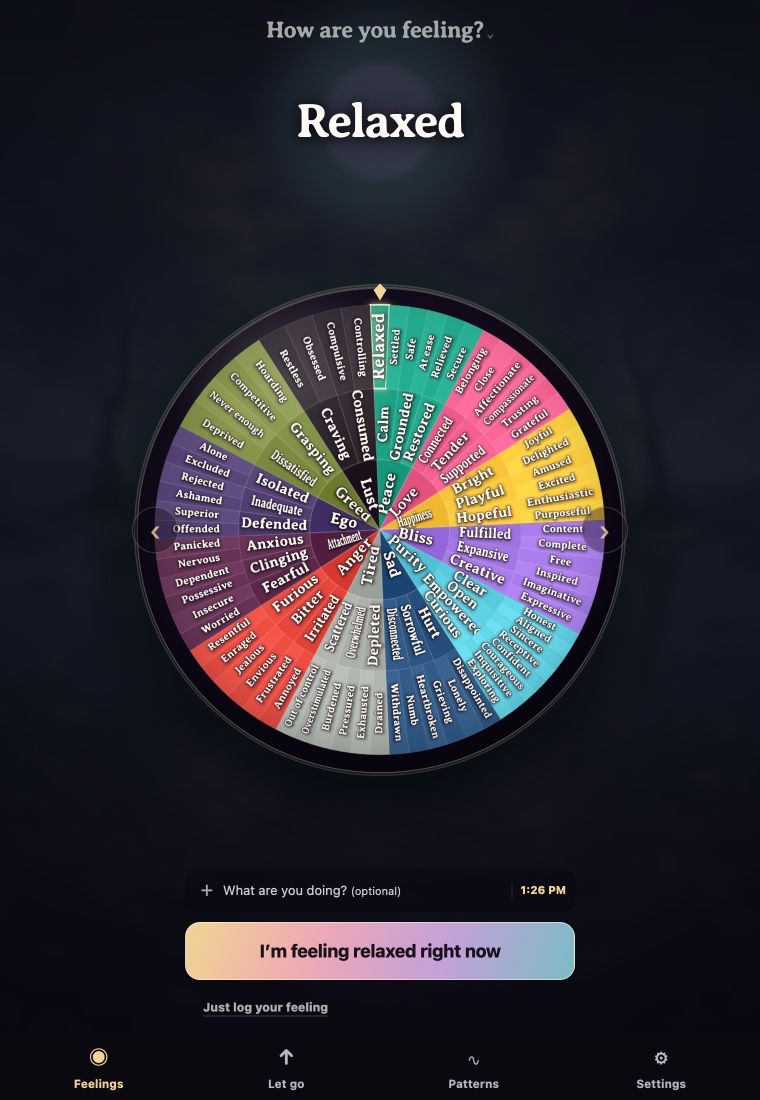
Why I created this app
A feed, video, game or shopping app can change your attention quickly. The uncomfortable feeling underneath the urge to escape may still be waiting when the screen closes.
The distraction changes your attention. The feeling may still be there when the screen closes.
The app gives you a pause to feel the emotion before deciding what to do next.
The basic practice
Practise allowing the feeling so you can learn the art of letting go.
Stay with the direct experience rather than escaping into a story or a screen. The feeling may change, reveal another layer or pass in its own time.
Become aware of the feeling and the sensations in your body.
Let the feeling be present without distracting yourself or forcing it to change.
Loosen your grip, release the feeling and notice what you feel now.
The practices draw on letting-go traditions. Read the official Hawkins excerpt and the official Sedona explanation. Feel Your Feelings is independent and does not claim affiliation with or endorsement by David R. Hawkins, Veritas Publishing or Sedona Training Associates.
Choose a practice
The app includes different ways to stay with and release a feeling. Try the basic practice first, then choose another approach if it suits you better.
Stop fighting the feeling first. When you are ready, loosen your hold and let the feeling go.
Welcoming means allowing the feeling and its sensations without fixing, judging or suppressing them. Letting go invites release without forcing the feeling to disappear.
Continue: Return to Welcome and meet the feeling that is present now.
Use each breath as a gentle rhythm: welcome on the in-breath and release on the out-breath.
The breath gives the practice a natural pace. Each breath is one manageable round, so the whole feeling does not have to release at once.
Continue: Begin the next breath with the feeling or resistance that is present now.
Feel a positive feeling fully, then breathe the feeling out and send it all around you.
The practice is for Peace, Love, Happiness, Bliss and Purity. The in-breath receives the feeling; the out-breath gives the feeling freely.
Continue: Receive the feeling again, then keep giving the feeling all around you.
Move away from the story and towards the direct sensation, layer by layer.
Turn towards the pressure, movement, temperature, texture, image or energy in the body. Keep moving underneath each layer instead of analysing the story.
Continue: When another layer appears, move towards the centre of the new layer.
Stay with the feeling while surrendering the effort to suppress, escape, judge, explain or control the experience.
Resistance and mental commentary can keep emotional energy active. Notice the feeling, stop feeding the story and allow release to unfold in its own time.
Continue: Meet the next feeling or resistance with the same willingness.
Welcome the feeling, then move through: Could I? Would I? When?
The questions are an experience, not an intellectual test. A yes or no answer is allowed.
Continue: Notice the feeling that is present now, then begin again with the remaining layer.
Explore resisting and holding on so the effort of gripping becomes conscious.
Trying hard to let go can create another struggle. Deliberately notice resistance and the effort required to hold the feeling.
Continue: Return to the first question and notice whether the effort of holding has changed.
Look behind the passing feeling and rest in the qualities underneath.
Allow the feeling to be present, then look behind and underneath the feeling. Rest in peace, love, happiness, bliss and purity.
Continue: Move through the five qualities, returning to peace after purity.
Welcome the burden, place the burden before God, surrender ownership and receive spiritual support.
The burden is consciously given to God. The practice ends by receiving love, light, freedom and joy in the space created by surrender.
Continue: Welcome the next layer, surrender the layer and receive again.
Begin inside safety and Divine Love, welcome the feeling with love, then surrender the feeling into that love.
Imagine a peaceful place held by Divine Love. Welcome the feeling inside that relationship and return the feeling to the love already around you.
Continue: Return to the safe place surrounded by Divine Love and peace.
Try the app
Choose a feeling, stay with it, and use a guided practice to work with what is underneath the urge to escape.
Try Feel Your Feelings →Free web app. Saved records stay in your browser unless you export them. Feel Your Feelings is not a clinical tool.