“Your job is probably going to disappear,” my friend told me over coffee. “AI is already writing better than most humans.”
I smiled. What he did not know was that I had just finished my most productive month ever, with AI as my ally. I am probably the least likely person to say that.
I lock my phone in a safe for eighteen hours a day. From my quiet home in the Sedona desert, I often spend days in digital silence, choosing solitude and meditation over constant connectivity. I have spent years writing about how screen addiction is eroding our humanity.
And yet, I have found one of my most useful allies in artificial intelligence. It can feel like having a team of willing experts ready to support my life and work. What I have learned through this unlikely partnership is simple: the more powerful AI becomes, the more valuable our human skills become.
What the title means. AI can imitate language associated with empathy, taste, intuition and judgment. This essay makes a narrower claim: we should not hand a tool responsibility for our purpose, our relationships, our values or the consequences of our decisions.
The more powerful AI becomes, the more important it is to slow down
AI can process in one second what might take me hours to work through. It is like talking with the world's most caffeinated genius: unlimited coffee, no need for sleep and an endless supply of possible answers.
The temptation is to try to keep up. One prompt leads to another. Every answer creates five more options. Before long, there is more information than wisdom and more activity than direction.
The real value appears in the spaces between. Living in the desert has taught me that clarity often comes when the non-essential falls away. My relationship with AI needs the same clarity. The aim is not to accumulate every possible answer. It is to find what matters inside the noise.
The seven skills I refuse to hand over
Wisdom and discernment
AI can analyse a vast number of decisions. It cannot take responsibility for whether something should be done, whom it may harm or what it means inside a particular life.
My practice: before I ask AI, I sit quietly and write my own view. Then I use the tool to question, expand or test it.
Vision and purpose
AI can help optimise a goal. The goal still has to come from somewhere. The ability to imagine a worthwhile future and help other people see it begins with human values, longing and experience.
My practice: I journal about the future I want before I ask a machine how to get there.
Heart-to-heart connection
AI can simulate the language of empathy. It cannot replace being present with another person, noticing what has not been said and allowing the conversation to change both people.
My practice: at least one real conversation without a phone, a transcript or a machine helping me script what to say.
Inner wellbeing
Self-awareness and inner peace cannot be outsourced to an algorithm. As work becomes faster, the ability to notice our own state and return to a steadier one becomes more important.
My practice: meditation, periods of digital silence and stopping when I feel my mind becoming scattered.
Aesthetic judgment and taste
AI can generate many competent versions. Someone still has to decide what is alive, honest, beautiful, useful or worth keeping. That judgment grows through attention and contact with work we respect.
My practice: I keep editing until the result feels like mine. The first output is material, not the finished work.
Intuition
Intuition is shaped by lived experience, memory and patterns that may be difficult to explain. It can be wrong, but replacing it with an AI answer does not remove the need for judgment.
My practice: I write down my sense of the situation before checking the data or asking AI.
Emotional intelligence and empathy
Human situations contain fear, pride, history, power and unspoken needs. A useful answer is not always the answer that is technically correct. We remain responsible for how a decision lands in another person's life.
My practice: I notice the emotion in a conversation before trying to solve the problem.
My best ideas do not arrive while I am talking to AI
My most useful ideas tend to come during silent walks in the desert, morning meditation, a shower or a period of complete digital disconnection. Once I have the idea, I bring AI in as an amplifier.
I use it to explore additional angles, test an explanation, refine a course description, analyse business information and help organise material. But AI helps me examine what is. Human wisdom still has to decide what should be.
This distinction protects the work. I begin with a foundation. I keep the direction. I discard what does not fit. If I begin with an empty prompt and no view of my own, I can end up with an impressive amount of material that has nothing to do with what I really wanted to say.
The 90/30 rhythm gives fast work time to settle
Through trial and error, I developed what I call the 90/30 Rule. The exact timing can change. The principle matters more: after a substantial period of AI interaction, I take a real period away from the machine so the information can settle.
- Begin like an architect with a pencil sketch. Write the initial idea, the point and the basic structure before asking for help.
- Use AI as an amplifier. Explore variations, test angles and gather material while keeping the creative direction.
- Stop after roughly sixty to ninety minutes. Do not let the speed of the tool decide the length of the session.
- Take twenty to thirty minutes away. Walk, meditate, exercise, shower or sit without adding more information.
- Return as the editor. Keep what still feels true and useful after the excitement of generation has passed.

Each human skill becomes stronger through ordinary practice
Wisdom
Before AI: sit in silence for five minutes.
Watch for: asking the tool before forming any view of your own.
Purpose
Before AI: write what a good outcome would mean and whom it should serve.
Watch for: allowing a convenient output to change the goal.
Connection
Every day: have one conversation with no technology present.
Watch for: asking AI to manufacture words that should come from you.
Inner wellbeing
During work: keep a real period for integration.
Watch for: mental scatter, stress and the urge to keep prompting after the work has stopped improving.
Taste
During editing: compare the output with work you genuinely respect.
Watch for: accepting the first fluent draft because it arrived quickly.
Intuition
Before checking: record the decision your experience points toward.
Watch for: treating confidence from a machine as evidence.
Empathy
With people: notice what may be difficult to say directly.
Watch for: using a technically neat answer where presence is needed.
I know I have used AI for too long when my mind starts to scatter
The warning signs are easy for me to recognise now: information overload, weaker decisions, less creative insight, disconnection from my own wisdom and the addictive pull to keep engaging rather than stop and integrate.
The answer is not to reject AI. It is to step away long enough to return with a clear purpose. Every time I come back from silence, the collaboration becomes more directed and more useful.
AI is the tool; the human being keeps the direction
AI can handle complexity at extraordinary speed. The wisdom of how to use it, the discernment about what to keep, the taste that shapes the final work and the human connection that gives the work meaning still have to be developed.
The aim is not to compete with a machine by processing more information. It is to use the machine while protecting the qualities that make the information worth having.
The faster the tool becomes, the less sense it makes to race it. Slow down. Form a view. Ask for help. Step away. Then return and decide.
Originally published 14 February 2025. Edited and reviewed 11 August 2026. The first-person experience and working method are Michael's. The editorial boundary is stated near the beginning.
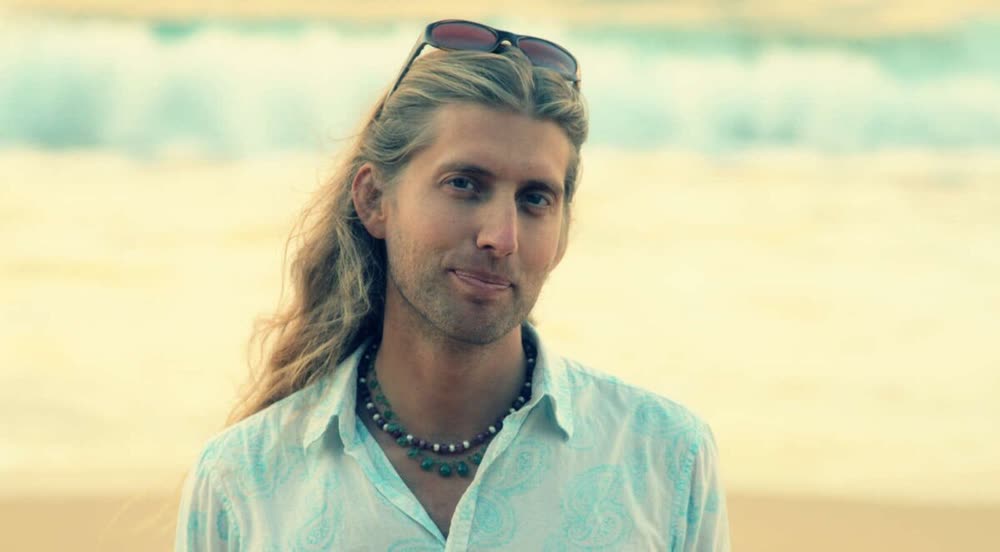
Michael has spent much of his working life online—and much of the rest of it trying to stop that technology taking over. He has thrown a phone into a lake, locked devices in boxes and experimented with long periods offline. He writes about what helped, what failed and how to keep the useful parts of digital life.