If you decide to watch one episode and are still there four hours later, the useful question is not whether television is bad. It is: what made stopping harder than continuing?
Start with the mechanics. Turn off next-episode autoplay. Choose the last episode before the first one begins. When the credits start, stand up and leave the room before you decide whether to continue. Then look at the harder part: whether the programme is giving you company, postponing bedtime or helping you avoid something you do not want to feel.
Where this article comes from: the three personal accounts below are from Michael Mackintosh's manuscript Entranced. The research is kept separate and linked to the original papers. The practical steps are the ones Michael now uses; they are not presented as a clinically tested treatment.
The stopping plan
- Choose the final episode before you start. “I will stop after episode two” is a decision. “I will see how I feel” leaves the decision to the most absorbed and tired version of you.
- Turn off autoplay. Make continuing require a deliberate action. Netflix, for example, lets you disable “Autoplay Next Episode” in each profile's playback settings.
- Use the credits as the exit. Stand up, switch on the lights, drink water and move into another room. Do that before you negotiate with yourself.
- Prepare what comes next. Put the book on the chair, make the bed ready, arrange the call or leave your shoes by the door. “Stop watching” leaves an empty space. Give that space somewhere to go.
- If the plan keeps failing, name the real job. Is the programme helping you avoid silence, loneliness, work, sleep or a feeling? A viewing rule cannot solve a problem you have not named.
I needed to know how it ended
Saturday, 2023
“See you next week. Lots of love.”
I close the laptop and recline in my chair. Saturday afternoon, 1:30pm. Final session of the week done. Plenty of time to decompress, let go, relax. The sun is shining.
I open the laptop again and click on Amazon. Just for a second. On the banner is an advert for Mr Robot. While I figure out what to do with my afternoon, I click play and settle back in my chair just for a moment.
At 4pm part of me feels this isn't the best use of my afternoon. I get up, make myself a snack, sit back down and press play.
At 8pm the light outside has gone. I can see my reflection in the window from the glare of the screen.
By 10pm I know I should go to bed. But I'm only in season two, and I would be doing myself no favours going to bed not knowing how it ends.
I can't tolerate not knowing. So for the sake of my own peace of mind, I press on.
By 2am I know something is seriously off but still can't get up.
At around 4am my eyes hurt. My back hurts. I feel dizzy. I make myself stop.
At 8am I roll out of bed, splash water on my face and teach my class. Somehow I manage to be present enough to say something useful. As far as I can tell nobody knows.
As soon as it ends—and I end it earlier than usual—I click play. I've started skimming whole episodes to speed things up. Four full series is a lot. But I get there in the end. Determination does, it seems, pay off. Never give up on your dreams.
By 2:30pm I watch the final episode.
It doesn't make sense. And something still feels missing. I google the ending.
I don't actually care about the show.
I watch it again.
By the time I've had a shower and come to around 3pm the following day, I let myself say it out loud.
This is not normal behaviour.
This is not me. This is not something I do.
Something is wrong.
The ending was not the thing I needed
I told myself I needed to know how the story ended. When it ended, I still did not feel finished. I searched for an explanation, watched the ending again and was left with the same fact: I did not actually care about the show.
That distinction matters. Enjoying several episodes is not automatically a problem. The warning signs are simpler: you repeatedly watch longer than you decided, lose sleep, neglect something important or continue after it has stopped being enjoyable.
Why the next episode can be harder to stop
The stopping point has been removed
Broadcast television used to stop. An episode ended and the schedule changed. A streaming service can move straight into the next episode, so continuing requires nothing and stopping requires a decision. That does not force anyone to keep watching, but it removes a useful pause.
Netflix's own instructions explain how to switch off next-episode autoplay. Other services use different names and settings. The principle is the same: put the decision back between the episodes.
The story is unfinished
A cliffhanger creates a clean reason to continue: one more episode will close the loop. Sometimes it does. Sometimes each answer opens another question. A 2020 systematic review found no single agreed definition of binge-watching, but it identified immersion, emotional engagement and losing control of time as recurring features in the research.
The programme is doing another job
A show can be rest, pleasure or a shared ritual. It can also be company, anaesthetic or delay. If you only attack the number of episodes, you can miss the reason the episodes are there.
A screen can feel like somewhere safe
A tiny village in Oxfordshire, England, 1985
I am five years old and have almost lost all my hearing.
The world is muffled. I don't know what is happening. I just feel so alone.
My mother wants me to drink disgusting yellow liquid on a spoon. She says it will help.
Why am I being punished?
My back is to the window. I sit in front of a giant TV screen, volume turned up as high as it will go so I can hear some of it if I focus.
I am left out. Lost. Broken.
I can't explain my feelings… but I am no longer really here.
The noise is muffled, but the images mesmerise me.
As I sit there, I vanish.
I am alone, but not alone anymore.
The pain disappears. I become these fascinating people doing amazing things.
I am in another world.
I am home. I am safe.
Television did not begin as a villain in my life. It gave a frightened, isolated child somewhere else to go. That is why simple instructions to “use willpower” can miss the point. If a screen has become safety or company, removing the screen can expose the thing it has been covering.
Sometimes the programme is company
More recently than I'd like to admit
I'm coming home early, having not really—honestly—enjoyed my walk.
The walk was magical, but subdued by my latest occasional obsession that seems to burn brightest sometime on Tuesday evening, and then fades away again by Wednesday.
It comes in the form of Ted Lasso.
I clicked on it once.
And now I'm rushing back because I want what I want and pretend I don't.
As usual, I don't necessarily enjoy the actual show itself. It is good. Objectively, it's a solid production. But really, in my heart of hearts, I don't care. And I know I don't. And it makes no difference at all.
I just want to get this out of the way so I can focus.
I'm not used to living alone.
When she was here, we had each other as company. Even if we were in different rooms, it still made a difference, a living being to share with.
But still, I can't pretend that coming home to a silent house, when the sun sets, and I'm sitting alone, is something I've really accepted.
Or—if I'm honest—even fully experienced.
Which is why Ted is here.
I don't admit that to myself. I don't fully know it. Maybe a bit.
But the part that sort of knows is pushed to the back.
And right now, I sit down. Alone.
And press play.
Ask this before you press play
What am I asking this programme to do for me tonight?
“Entertain me for an hour” is a clear answer. So is “keep me company because the house feels empty.” The second answer does not mean you are broken, and it does not mean you must stop watching. It tells you why a timer alone may not be enough.
If the real need is company, put some human contact into the plan: arrange a call, watch one episode with someone, go somewhere other people are present or make tomorrow's social plan before the programme starts. If the need is avoiding work or a difficult feeling, write down the smallest next action and when you will take it. The goal is not to moralise about television. It is to stop asking a programme to solve a problem it cannot finish.
What the research says—and does not say
A 2020 systematic review found that binge-watching has been defined in several incompatible ways: by episode count, viewing time, frequency or the viewer's experience of lost control. It also found associations with sleep loss, loneliness and difficulty regulating emotion. The authors warned that the research was still limited.
A 2023 study of 462 adults found more binge-watching and more viewing to cope with negative emotions among poor sleepers than good sleepers. Within the poor-sleeper group, loneliness and difficulty regulating emotion were associated with problematic binge-watching. The study was observational. It cannot show that streaming caused the sleep or emotional problems.
The honest boundary
Research can identify patterns across groups. It cannot tell you why you watched last night. Use the evidence as a prompt to examine control and consequences—not as a diagnosis.
If you keep breaking your own limit
Try the five-step plan for a week. Keep the target narrow: a fixed final episode, autoplay off and a prepared exit. If you repeatedly continue despite lost sleep, missed work, conflict or distress, stop treating it as a minor entertainment preference.
Use the twelve-question technology-use quiz to look at control and consequences. If streaming is part of a wider pattern that feels beyond your control, read what media addiction means and where to find free meetings and professional help.
Sources
- Starosta JA, Izydorczyk B. Understanding the Phenomenon of Binge-Watching—A Systematic Review. International Journal of Environmental Research and Public Health. 2020.
- Alfonsi V et al. “This is the last episode”: problematic binge-watching, loneliness, emotion regulation and sleep-related factors in poor sleepers. Journal of Sleep Research. 2023.
- Netflix Help Center. How to autoplay the next episode. Current setting instructions checked 10 August 2026.
Evidence checked 10 August 2026. The studies and current autoplay instructions are linked above.
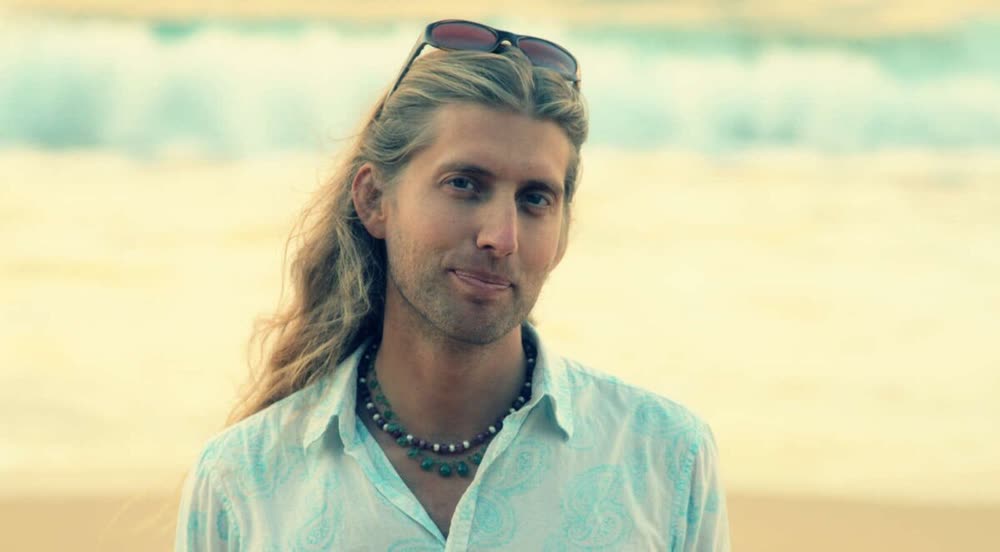
Michael has spent much of his working life online—and much of the rest of it trying to stop that technology taking over. He has thrown a phone into a lake, locked devices in boxes and experimented with long periods offline. He writes about what helped, what failed and how to keep the useful parts of digital life.